Can Circle Exhibit Help With Your Trade Show Booth In 2026?

Exhibiting at a major U.S. trade show involves a significant financial risk. Therefore, your success depends heavily on the performance of your trade show booth builder.
In high-density exhibition markets like Las Vegas, operational errors can quickly ruin a company’s marketing budget.
For instance, late freight shipments or union labor misunderstandings frequently cause major delays.
This review analyzes Circle Exhibit, which specializes in structured trade show exhibit execution.
Consequently, this deep-dive review breaks down their operational capabilities, service models, and structural offerings. Read on to determine if they are the right partner for your 2026 trade show calendar.
About Circle Exhibit
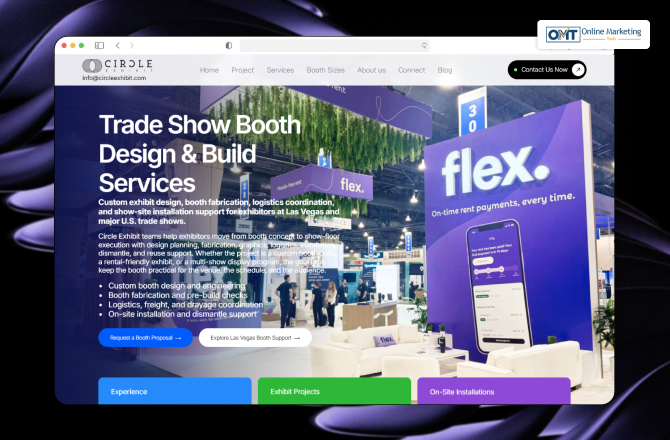
Circle Exhibit is a professional trade show booth builder. The company helps brands navigate complex floor constraints.
Circle Exhibit serves exhibitors across major national convention hubs. However, their operations are built specifically to handle the complex venue ecosystems of Las Vegas.
Specifically, they focus their project management on the primary operational risk areas of exhibiting.
Besides, these risk areas include:
- Structural engineering validation.
- Logistics sequencing.
- Navigating union labor guidelines.
Operational Philosophy
Circle Exhibit uses a structured, execution-focused workflow. Their operational model prioritizes mechanical feasibility over abstract design concepts.
For example, their foundational rule states that if an exhibit cannot be built efficiently within real-world venue constraints, it will not be approved during the initial design phase.
Primary Service Phases
| Phase | Core Operational Focus |
| Design and Engineering | Creating layouts built strictly around venue-specific rules, structural integrity, and traffic flow. |
| Fabrication and Prebuild | Assembling and testing every booth physically at their facility before shipping to catch errors. |
| Logistics Sequencing | Packing, labeling, and crating materials to match the exact physical setup order on the floor. |
| On-Site Labor (I&D) | Managing the entire on-site build and teardown while coordinating directly with labor unions. |
During the initial phase, creative layouts are developed with venue rules and traffic flow in mind. Afterward, technicians verify dimensions and hardware stability before any materials ship.
Furthermore, transport timing is matched precisely to specific move-in windows. Finally, field teams handle installation within strict union frameworks.
Circle Exhibit Trade Show Booth Services
Circle Exhibit provides comprehensive support across five core service areas to take your project from initial concept to the show floor. We manage the structural, graphical, logistical, and venue requirements that keep your exhibition practical, compliant, and impactful.
1. Exhibit Design
Booth layouts are engineered around visitor flow, product displays, and structural safety.
- Layout Planning: Tailoring configurations for 10×20 inline spaces up to 30×40 island environments.
- Functional Zones: Integrating dedicated meeting areas, product demo kiosks, and secure storage.
- Structural Feasibility: Ensuring structural choices match booth size, visibility goals, and venue regulations.
2. Booth Fabrication
Raw concepts are transformed into physical booth components through precise production and quality checks.
- Component Production: Manufacturing custom walls, modular structures, counters, and counters.
- Prebuild Checks: Testing, labeling, and packing all components before they leave the warehouse.
- Branded Graphics: Sizing and producing backwalls, SEG fabric panels, and integrated lightboxes.
3. Logistics Coordination
Comprehensive freight and administrative management prevents costly delays before the event begins.
- Freight Timing: Scheduling transit to meet strict venue move-in windows and target dates.
- Material Handling: Coordinating advance warehouse delivery, crate handling, and drayage.
- Pre-Show Paperwork: Managing carrier paperwork, venue access documentation, and scheduling.
4. On-Site Installation
Experienced show-site crews handle the physical setup and teardown of your asset.
- Installation Sequencing: Executing efficient build plans from structural framing to electrical hookups.
- Final Styling: Aligning graphics perfectly, setting up AV equipment, and adjusting light placement.
- Dismantle and Repack: Breaking down the booth, inventorying components, and packing crates securely.
5. Las Vegas Show-Site Execution
Specialized local expertise navigates the unique operational rules of major Las Vegas venues.
- Venue Compliance: Working inside the LVCC, Venetian Expo, and Mandalay Bay Convention Center.
- Labor and Regulations: Managing local union labor schedules, freight handling, and venue guidelines.
- Flexible Packages: Deploying either full custom builds or agile, customizable booth rentals locally.
Circle Exhibit: How The Project Execution Process Works
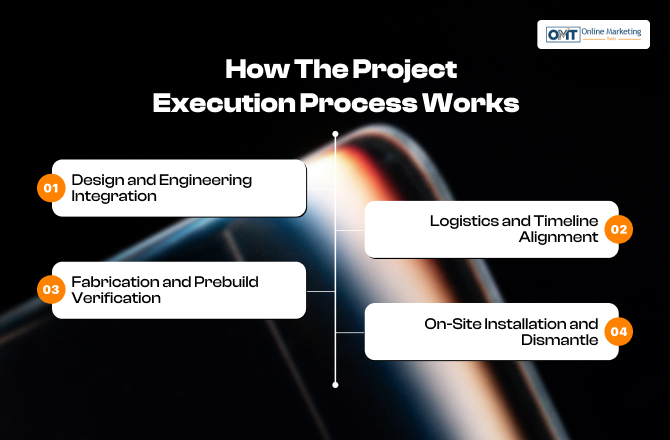
The journey from a digital concept to a physical trade show booth follows a strict four-step workflow. Each step is designed to minimize risk.
For instance, here’s how the typical execution workflow phases look:
- Design and Engineering Integration: Your goals are converted into 3D CAD blueprints that match venue rules.
- Fabrication and Prebuild Verification: Technicians build the booth in-house to confirm component tolerances.
- Logistics and Timeline Alignment: Materials are created based on setup order to hit assigned marshal windows.
- On-Site Installation and Dismantle: Local site supervisors lead authorized union crews through final detailing
First, brand guidelines are translated into engineering blueprints. Next, technicians conduct a physical test build to check wiring access and structural safety. Then, displays are packed into custom crates based on the installation sequence.
Finally, field supervisors lead local union crews through structural assembly, electrical distribution, and detailing.
What To Prepare Before Contacting Circle Exhibit?
To get an accurate proposal and a realistic engineering timeline, you should prepare several details before reaching out to their team.
Here is the exhibitor preparation checklist:
| Category | Required Information | Purpose |
| Target Show Details | Name of host city, venue, and official show manual links. | Establishes local rules and deadlines. |
| Booth Parameters | Exact booth number and footprint type (Island, Peninsula, Inline). | Clarifies boundary and sightline rules. |
| Functional Needs | Requirements for conference rooms, heavy machinery, or presentation stages. | Dictates structural layout and power needs. |
| Brand Assets | Vector logos, official brand style guides, and high-resolution graphics. | Speeds up the graphic production phase. |
Final Verdict: Can They Help Your Trade Show Booth?
Ultimately, Circle Exhibit provides high-value support for exhibitors targeting major U.S. convention markets. Moreover, they are especially helpful for those facing the complex operational rules of Las Vegas venues.
In particular, their prebuild testing process, strict engineering standards, and clear focus on union labor rules help prevent costly show-floor mistakes.
On the other hand, if you only need cheap, basic banner stands, a standard online graphics supplier might be a better fit instead.
However, if your brand requires an accurate, reliable, and well-managed booth execution that stands out on the show floor, then Circle Exhibit is a highly qualified partner for your 2026 trade show program.
Read Also: